At The Village and The Rutledge Institute, we believe in fostering a love for learning and a strong sense of self-efficacy from the very beginning. You might think “goal setting” sounds like something for adults or older children, but the truth is, even our tiniest learners can benefit immensely from this practice!
But what does goal setting look like for a toddler or a preschooler? It’s certainly not about annual performance reviews! Instead, it’s about breaking down everyday tasks and aspirations into achievable, concrete steps that build confidence, independence, and a crucial understanding of cause and effect.
Why Tiny Goals Matter for Little Ones
- Builds Confidence and Self-Esteem: When a child successfully completes a task they set out to do, even something as simple as putting their shoes on, they experience a surge of accomplishment. This “I can do it!” feeling is vital for developing a healthy self-concept.
- Fosters Independence and Autonomy: Giving children a voice in what they want to achieve, even if it’s guided, empowers them. It shifts them from being passive recipients of instruction to active participants in their own learning and development.
- Develops Problem-Solving Skills: Encountering a challenge while working towards a goal (e.g., the block tower keeps falling) encourages persistence and creative thinking. Children learn to try different approaches.
- Teaches Persistence and Resilience: Not every goal will be easy to achieve on the first try. Working towards a goal, even with gentle guidance, teaches children the value of trying again and not giving up.
- Introduces Sequencing and Planning: Even simple goals, like “I want to build a tall tower,” involve a basic sequence of actions: gathering blocks, stacking them carefully, and balancing. This lays the groundwork for more complex planning later on.
What Do “Goals” Look Like for Young Children?
Forget abstract concepts. For young children, goals are tangible and often involve daily routines or play. Here are some examples:
- Self-Help Goals:
- “I want to put my jacket on all by myself.”
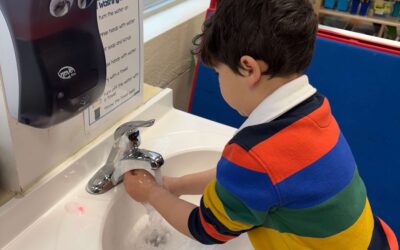
- “I want to help put my plate in the sink after snack.”
- “I want to try to use the potty when I feel like I need to go.”
- Play and Learning Goals:
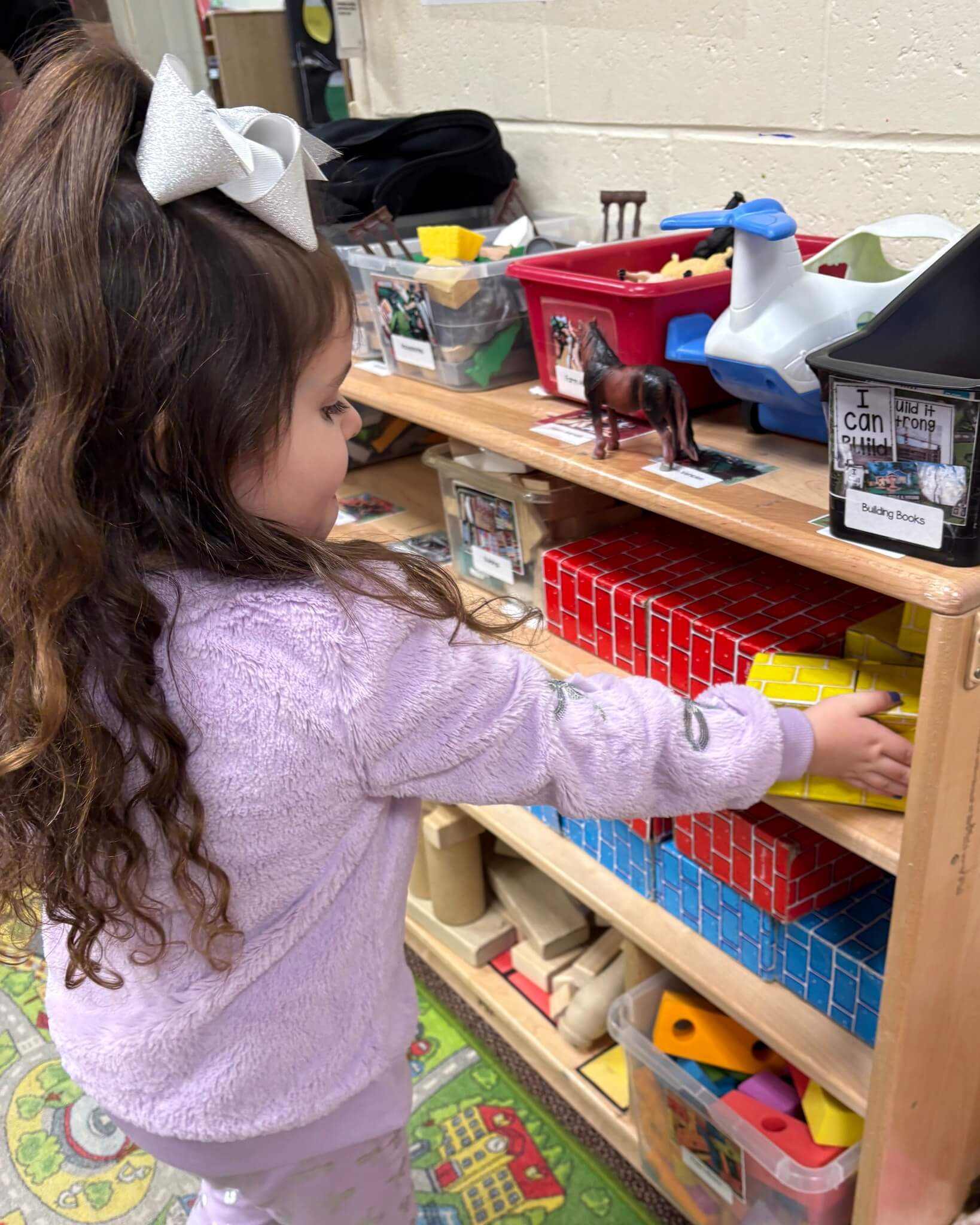
- “I want to build a house for my teddy bear out of blocks.”
- “I want to put all the puzzle pieces together.”
- “I want to draw a picture with three different colors.”
- Social-Emotional Goals (with guidance):
- “I want to ask my friend if I can play.”
- “I want to share my toy truck.” (Often guided by an adult saying, “Can you share your truck with Sarah today?”)
How We Help Children Set and Achieve Goals (and How You Can Too!):
- Keep it Simple and Concrete: Focus on one clear, observable action.
- Make it Achievable: Goals should be challenging but not frustrating. Success breeds motivation!
- Use Visuals: Picture schedules, charts with stickers, or simple drawings can make goals more understandable for non-readers.
- Offer Choices: “Do you want to put away the blocks first, or the cars?” gives them ownership.
- Provide Positive Reinforcement: Focus on effort and progress. “Wow, you tried so hard to zip your jacket!” or “You kept trying, and look! You did it!”
- Break Down Tasks: If a goal is a little big, help them with the first step. “Let’s put one arm in the jacket, and then we’ll do the other.”
- Be a Model: Children learn by watching. When you express your own small goals (“I’m going to finish folding this laundry”) and achieve them, children learn the process.
We love witnessing the pride on a child’s face when they’ve accomplished something they set out to do. These tiny triumphs are the building blocks for future learning, resilience, and a lifelong belief in their own capabilities.