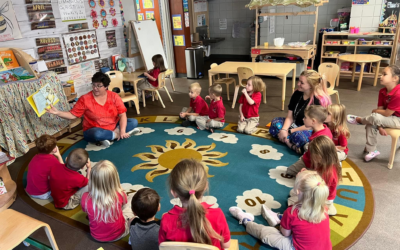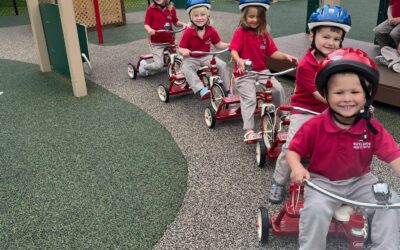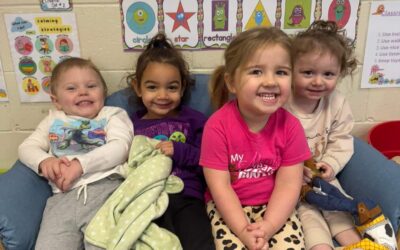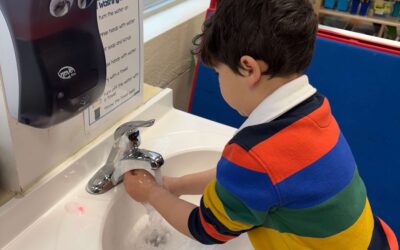
If you look at our weekly schedule, you’ll see a lot of variety: Sign Language, Swimming, and Theater. To an outsider, it might look like we’re trying to raise a fleet of multilingual, Olympic-swimming Shakespearean actors.
But at The Village, our goal isn’t mastery. We don’t expect a four-year-old to be fluent in American Sign Language or a master of the stage.
So, why do we do it? Because at this stage of life, the point isn’t the subject—it’s the exposure.
1. Trying Something New is a Skill
In early childhood, the “muscle” we want to exercise most is curiosity. When a child tries Sign Language or attempts a new stroke in the pool, they are learning how to be “beginners.” They are learning that it’s okay not to know everything yet and that the process of trying is where the fun lives. We are building brave humans who aren’t afraid of a new challenge.
2. Safety First (Literally)
Some “extras” are about more than just fun—they are about foundations. Swimming is the perfect example. We aren’t training for the gold medal; we are teaching water safety. Giving children a healthy respect for the water and basic survival skills is a gift that lasts a lifetime.
3. Wiring the Brain for More
Neurologically speaking, the preschool years are a “prime time” for brain development.
- Sign Language: Introducing these early doesn’t just teach new words; it actually builds more complex neural pathways. It helps children understand that there is more than one way to express a feeling or a thought, which builds empathy and cognitive flexibility.
- Theater: This is a masterclass in emotional intelligence. When a child “acts” out a story, they are practicing communication, empathy, and social cooperation.
4. Exposing the Heart to Big Ideas
By introducing different languages and art forms, we are expanding their world before they even leave California, PA. We want our students to know that the world is big, diverse, and full of different ways to communicate and create.
The Village Philosophy: Seeds, Not Trees
Think of these programs as seeds. We are planting them in a garden of play and discovery. Some seeds might grow into lifelong passions, and others might just be a fun memory of a Friday morning. Both outcomes are a win.
We aren’t looking for perfection; we’re looking for that “lightbulb moment” when a child realizes they can do something they couldn’t do yesterday.
Mastery can wait. For now, let’s just dive in, try something new, and see what happens.